Reach someone while the thought is still there.
Double-tap your summon key, type a name and press Enter to call. Shift-Enter starts a message. The shortcut brings Olatti forward from the work you're already doing.
Just have the conversation. Olatti brings your calls and team messages together: a business telephone system for UK teams who want to reach someone, say what they need to say and get back to work.
From £5 per user a month, billed annually at £60, or £6 on monthly billing. Calls charged separately on Metered. Prices exclude VAT.
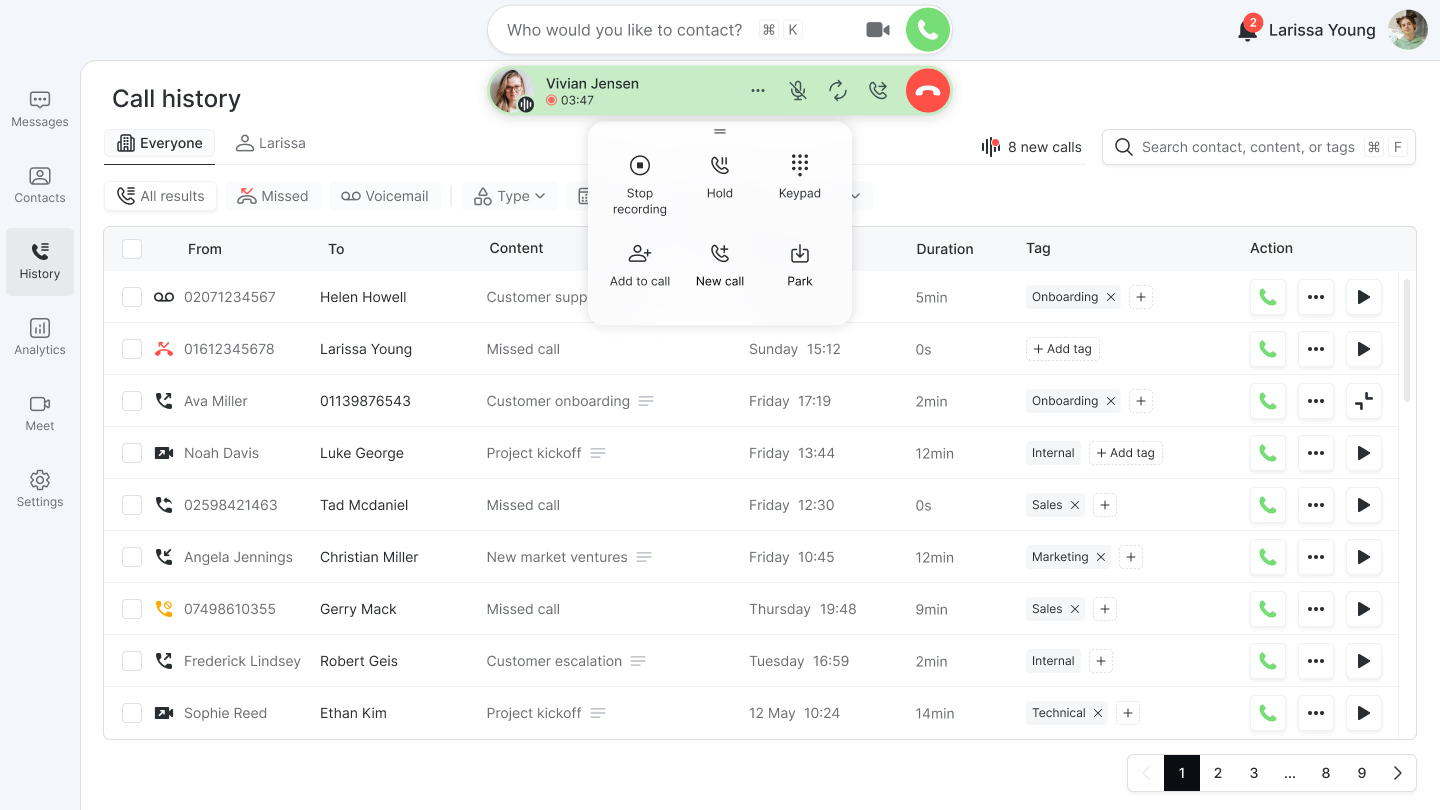
A business phone system, or business telephone system as it used to be called, gives your team a place to make and receive calls on your business numbers. With a cloud phone system, those calls travel over the internet. Your team can use apps or supported desk phones, without a phone cabinet in the office.
Olatti is built for small teams, typically five to a hundred people, who care about the tools they spend their day using. An agency taking client calls, a consultancy working between home and the office, a software team talking through a decision. The number belongs to the business. The conversation reaches the person.
Double-tap your summon key, type a name and press Enter to call. Shift-Enter starts a message. The shortcut brings Olatti forward from the work you're already doing.
Calls, direct messages and channels live in one product. Your call history gives you the number, the person and a way to call back, without copying digits between apps.
Call recording is included on every plan. Plus and Unlimited add call and voicemail transcription and summaries. Recording storage is 1 month on Metered, 12 months on Plus and 3 years on Unlimited.
Desktop and mobile apps are included. A desk phone can still make sense at reception or on a shared desk. Supported handsets are optional; check the hardware range before buying.
Every plan includes one UK number per user, inbound calls, team messaging, video meetings and the desktop and mobile apps. Compare the call allowance and recording storage below.
Scroll across to compare all three plans.
| Plan | Metered | Plus | Unlimited |
|---|---|---|---|
| Monthly billing | £6per month | £20per month | £25per month |
| Annual billing | £5 / month£60 billed per year | £17 / month£204 billed per year | £21 / month£252 billed per year |
| UK calls | Pay as you go1p landlines / 3p mobiles per minute | 2000 minutesPer user each month, pooled | UnlimitedSubject to fair use below |
| Call recording storage | 1 month | 12 months | 3 years |
| Transcription and summaries | Not included | Included | Included |
Prices are per user and exclude VAT. Annual prices are monthly equivalents, paid for the year. Metered calls cost 1p a minute to UK landlines and 3p to UK mobiles. Plus includes 1000 landline and 1000 mobile minutes per user each month, pooled across your team. Unlimited is subject to fair use of 2000 landline and 2000 mobile minutes per user each month.
Ported numbers cost £20 each when the port is raised, then £5 each month on top of your plan. Check the full plan comparison and fair use policy for the detail.
Your existing number is already on your website and in your customers' phones. Ask us to check whether it can move to Olatti before you cancel anything with your current provider.
A new account and an existing number transfer have different timelines. The porting date depends on your number, current provider and the details on the request. We confirm the next steps after checking them.
Count users, existing numbers and the calls your team makes. Compare monthly and annual commitments. Include call charges, porting and any hardware, rather than comparing the headline price alone.
Call a colleague, answer a customer and find a previous conversation. Check your required call routing and devices with the provider. A feature list won't tell you how those tasks feel.
Check storage periods, access and how recordings are processed. Olatti's voice, transcription and summaries run on We UC's own infrastructure. Read our privacy policy for how we handle data.
Confirm number eligibility, contract notice, broadband dependencies and the support you need. Our provider comparisons and short answers cover more of the buying questions.
Microsoft Teams Phone, RingCentral and 3CX offer different ways to handle business calls. Compare how each fits your team, connects your UK number and handles your data.
Scroll across to compare all four providers.
| Buying decision | Olatti | Teams Phone | RingCentral | 3CX |
|---|---|---|---|---|
| What it's built for | Calls and messages together in one app. | Calling within Microsoft Teams, alongside meetings and messaging. | Cloud calling, messaging and meetings, with contact centre products available separately. | A phone platform you can self-host or have 3CX host, connected to your chosen carrier. |
| Where it fits | Teams who want calls and messages within reach of what they're already doing. Double-tap a key to bring Olatti up. | Teams already using Microsoft 365 who want calling inside their existing collaboration app. | Teams looking for a broad communications suite, with separate contact centre options as their needs grow. | Teams who want to choose their hosting and phone carrier, with someone to configure and manage them. |
| Getting a UK number | A UK number is included, or port an existing number for £20 once and £5 a month per number, excluding VAT. | Requires Teams Phone and a connection through Calling Plan, Operator Connect, Teams Phone Mobile or Direct Routing. | UK numbers and number porting are available. Check eligibility and transfer dates for your existing number. | Your SIP trunk provider supplies the number and handles any transfer from your existing carrier. |
| Where your voice data goes | Calls and transcription run on Olatti's own UK infrastructure, without a third-party transcription provider. | Microsoft provides the Teams service. Your phone connection also depends on your chosen calling plan or carrier. | RingCentral operates the service under its published data processing terms and subprocessor arrangements. | Depends on your hosting, carrier and transcription setup. Check the options included in your edition. |
See the full comparison against Teams Phone, RingCentral and 3CX, or every provider we compare.
Openreach plans to retire its analogue phone network on 31 January 2027. If your business still relies on an old line, speak to your provider about what needs to change. Openreach explains the move to digital phone lines.
An internet phone service needs a working connection and power. If either fails, calls on the affected devices can stop. Plan how your team will stay reachable, including a separate mobile connection or suitable backup power where needed. Check alarms, payment terminals and other equipment that use the old line before changing it.
Moving a number can also affect broadband supplied on the same line. Ask your existing provider which services are linked before requesting the port. Ofcom's switching guidance explains why the services need to be considered together.
Our founder, Axel Molist, started in telecoms in 2012. He went on to start circle.cloud in 2015, installing and supporting other providers' systems for UK small businesses.
Olatti is the product we built after doing that work. One team building the calls, messages and the software around them, with voice, transcription and summaries running on our own infrastructure.